Hebe
English
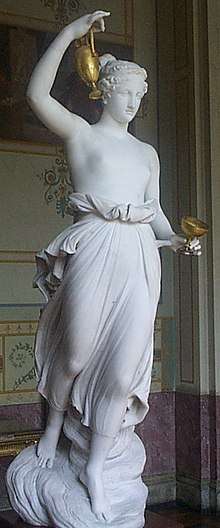
A statue of Hebe

Hebe astronomical symbol
Etymology 1
From Ancient Greek Ἥβη (Hḗbē, literally “Youth, Prime of Life”).
Pronunciation
- IPA(key): /ˈhiːbi/
- Rhymes: -iːbi
Proper noun
Hebe
- (Greek mythology) The goddess of youth, and a daughter of Zeus and Hera. Her Roman counterpart is Juventas[1]
- A female given name
- (astronomy) 6 Hebe, a main-belt asteroid.
- a group of mainly alpine shrubs, of approximately 200 species, found mainly in new Zealand.
Translations
Translations
a family of alpine plants found mainly in New Zealand
|
Derived terms
Etymology 2
Short for Hebrew.
Pronunciation
- IPA(key): /ˈhiːb/
- Rhymes: -iːb
Noun
Hebe (plural Hebes)
- (slang, derogatory, offensive) A Jew.
Synonyms
References
- ↑ Ovid does not detect a unity of Hera (Juno) and Hebe (Juventas): he opens Fasti via with a dispute between Juno and Juventas claiming patronage of the month of June (on-line text).
Anagrams
Polish
Proper noun
Hebe f (indecl)
Portuguese
Etymology
From Latin Hēbē, from Ancient Greek [Term?], from Ancient Greek Ἥβη (Hḗbē).
Pronunciation
- (Brazil) IPA(key): /ˈɛ.bi/
Proper noun
Hebe f
- (Greek mythology) Hebe (goddess of youth)
- A female given name
This article is issued from
Wiktionary.
The text is licensed under Creative Commons - Attribution - Sharealike.
Additional terms may apply for the media files.