𨳒
 | ||||||||
Translingual
Han character
𨳒 (radical 169, 門+3, 11 strokes, cangjie input 日弓火 (ANF), composition ⿵門小)
Related characters
- 屌 (Variant form in Cantonese)
- 𮤭 (Simplified form in mainland China based on Zhuang character)
- 𡮆, 𡮉 (Alternative forms in Vietnamese)
References
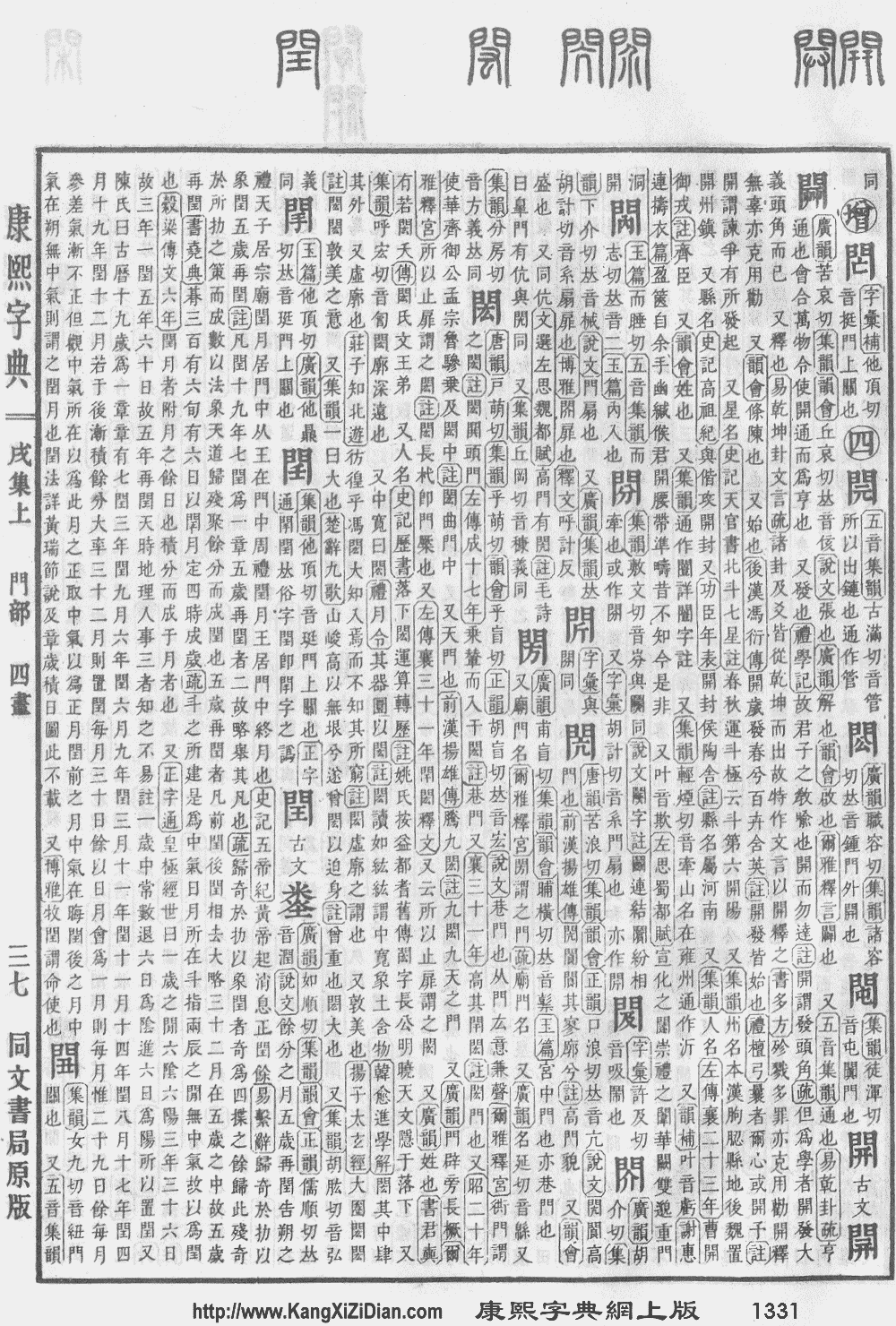
- KangXi: not present, would follow page 1331, character 1
- Unihan data for U+28CD2
Usage notes
Note that this character is used differently in Cantonese (see Chinese section), Vietnamese and Zhuang.
Chinese
| simp. and trad. |
𨳒 | |
|---|---|---|
Glyph origin
Phono-semantic compound (形聲) : semantic 門 + phonetic 小. Visually, 門 may be interpreted as legs, while 小, as male genitalia.
Pronunciation
Definitions
𨳒
Related terms
Other Cantonese profanities using the 門 radical: 𨳊, 𨶙, 𨳍, 閪.
Vietnamese
Han character
𨳒 (mọn)
Related terms
- 𡮮, 𡮬, 𫵈 (mọn)
Compounds
- 𡮈𨳒 (nhỏ mọn): petty; insignificant
References
- Nom Foundation
- Lê Sơn Thanh, "Nom-Viet.dat", WinVNKey (details)
Zhuang
Verb
𨳒
This article is issued from
Wiktionary.
The text is licensed under Creative Commons - Attribution - Sharealike.
Additional terms may apply for the media files.