鼈
| ||||||||
Translingual
Han character
鼈 (radical 205, 黽+12, 25 strokes, cangjie input 火大口X山 (FKRXU), composition ⿱敝黽)
Derived characters
- 虌, 𫦣
References
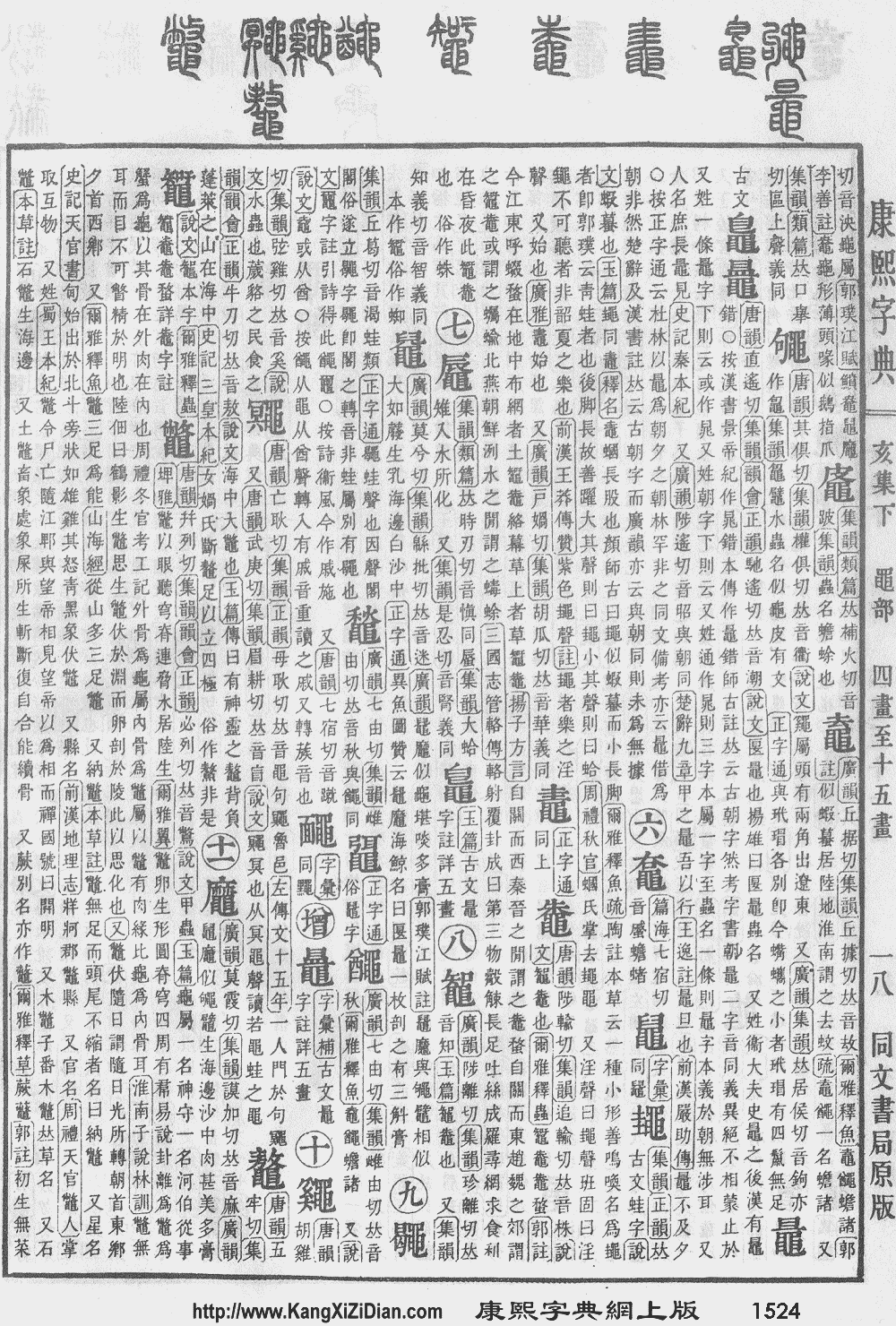
- KangXi: page 1524, character 27
- Dai Kanwa Jiten: character 48305
- Dae Jaweon: page 2060, character 11
- Hanyu Da Zidian: volume 7, page 4771, character 3
- Unihan data for U+9F08
Chinese
Glyph origin
Phono-semantic compound (形聲) : phonetic 敝 (OC *beds, *bed) + semantic 黽.
Etymology
| For pronunciation and definitions of 鼈 – see 鱉 (“a kind of freshwater turtle Trionyx sinensis ⇒ Pelodiscus sinensis”). (This character, 鼈, is a variant form of 鱉.) |
Japanese
Kanji
鼈
Readings
Derived terms
Compounds
- 鼈茸 (suppondake, “common stinkhorn”, Phallus impudicus)
- 田鼈 (tagame, a species of water bug)
- 鼈甲 (bekkō, “tortoiseshell”)
Etymology
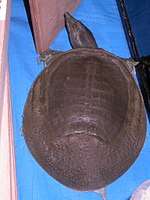
鼈
| Kanji in this term |
|---|
| 鼈 |
| すっぽん Hyōgaiji |
| kun’yomi |
Unknown, theories include:
- /supon/ → /suɸon/ → /sɨppõn/
- From スホン (suhon), the sound when it jumps into a river; or,
- /ɕɨbon/ → /sɨppõn/
- Corruption of 朱盆 (shubon, literally “vermillion tray”), a resemblance to its shell.
(Can this(+) etymology be sourced?)
Pronunciation
Noun
鼈 (hiragana すっぽん, katakana スッポン, rōmaji suppon)
Korean
Hanja
鼈 • (byeol) (hangeul 별, McCune–Reischauer pyŏl, Yale pyel)
- This term needs a translation to English. Please help out and add a translation, then remove the text
{{rfdef}}.
This article is issued from
Wiktionary.
The text is licensed under Creative Commons - Attribution - Sharealike.
Additional terms may apply for the media files.