麪
| ||||||||
Translingual
Han character
麪 (radical 199, 麥+4, 15 strokes, cangjie input 十水一中尸 (JEMLS), composition ⿰麥丏)
References
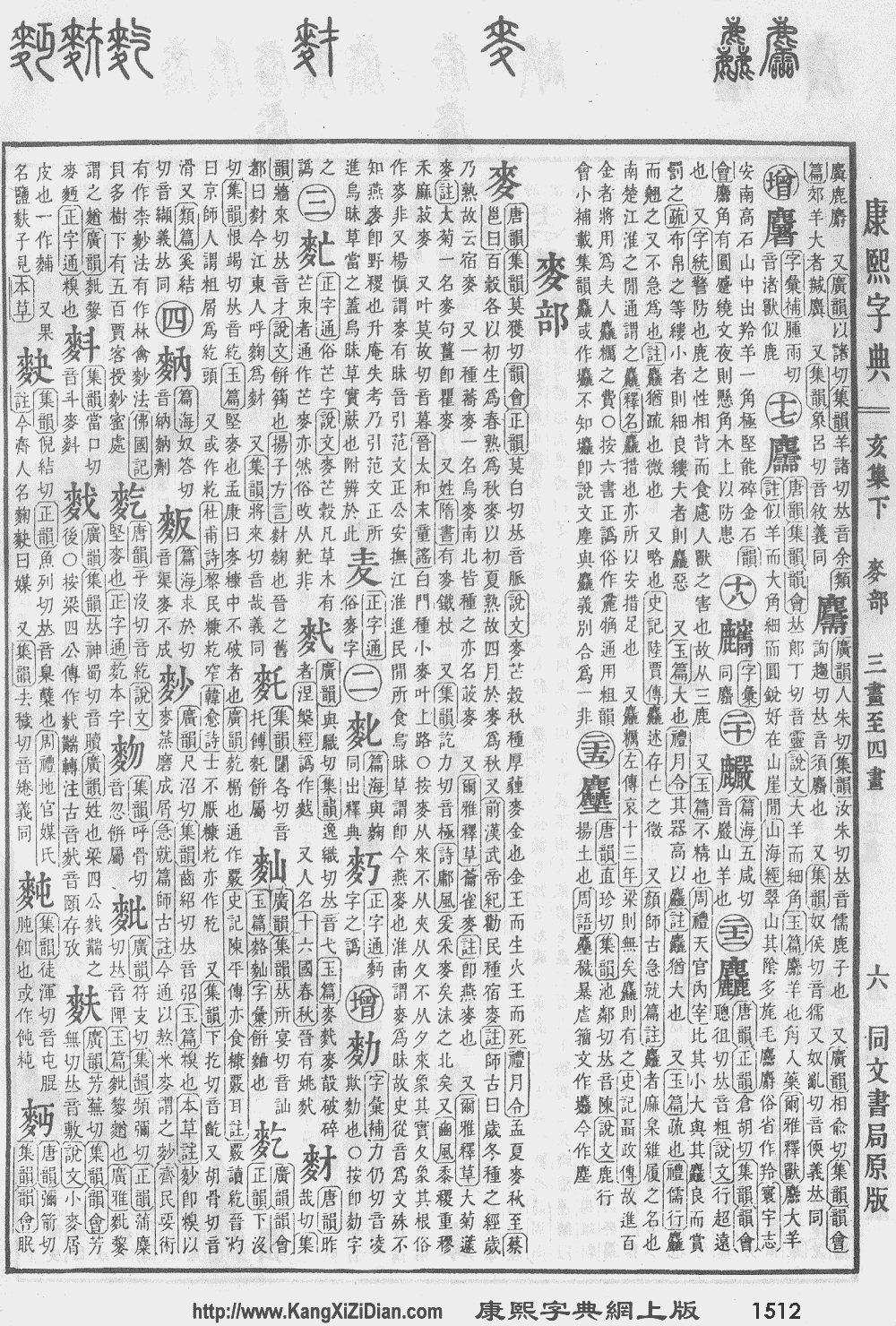
- KangXi: page 1512, character 30
- Dai Kanwa Jiten: character 47742
- Dae Jaweon: page 2041, character 21
- Hanyu Da Zidian: volume 7, page 4601, character 4
- Unihan data for U+9EAA
Chinese
Glyph origin
| Characters in the same phonetic series (丏) (Zhengzhang, 2003) | |
|---|---|
| Old Chinese | |
| 汅 | *menʔ |
| 沔 | *menʔ |
| 丏 | *meːnʔ |
| 眄 | *meːnʔ, *meːns |
| 麪 | *meːns |
Phono-semantic compound (形聲, OC *meːns) : semantic 麥 (“wheat”) + phonetic 丏 (OC *meːnʔ).
Definitions
| For pronunciation and definitions of 麪 – see 麵 (“flour; dough; etc.”). (This character, 麪, is a variant form of 麵.) |
Japanese
Kanji
麪
Readings
Compounds
Compounds
- 麪棒 (menbō): rolling pin
Etymology
| Kanji in this term |
|---|
| 麪 |
| めん Hyōgaiji |
| on’yomi |
From Middle Chinese 麪.
Pronunciation
Alternative forms
Noun
References
Korean
Hanja
麪 • (myeon) (hangeul 면, revised myeon, McCune–Reischauer myŏn, Yale myen)
- This term needs a translation to English. Please help out and add a translation, then remove the text
{{rfdef}}.
Vietnamese
Han character
- This term needs a translation to English. Please help out and add a translation, then remove the text
{{rfdef}}.
This article is issued from
Wiktionary.
The text is licensed under Creative Commons - Attribution - Sharealike.
Additional terms may apply for the media files.