鶍
| ||||||||
Translingual
Han character
鶍 (radical 196, 鳥+8, 19 strokes, cangjie input 日竹竹日火 (AHHAF), composition ⿰易鳥)
References
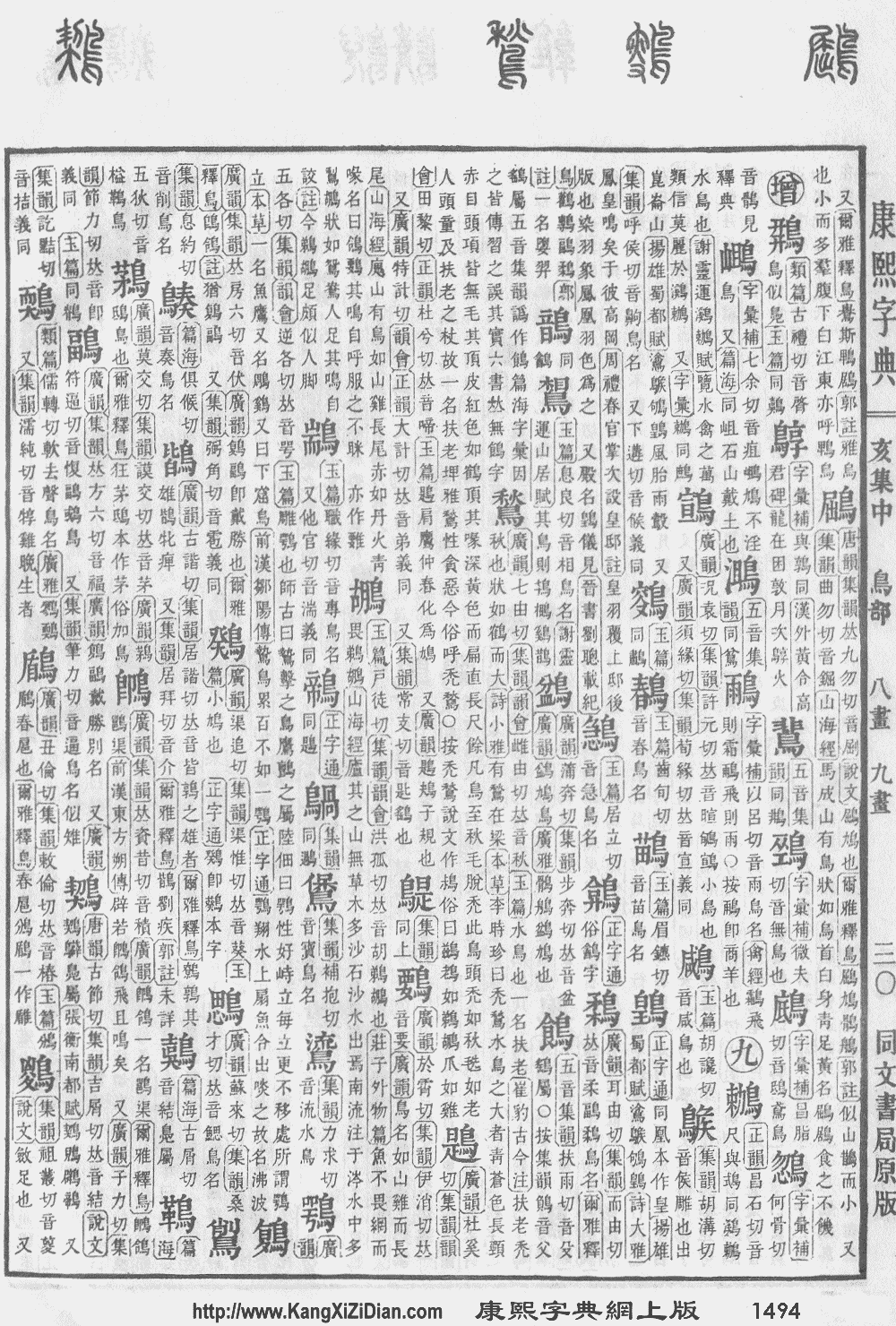
- KangXi: not present, would follow page 1494, character 10
- Dai Kanwa Jiten: character 47073
- Dae Jaweon: page 2024, character 6
- Hanyu Da Zidian: not present, would follow volume 7, page 4640, character 13
- Unihan data for U+9D8D
Japanese
Kanji
鶍
Readings
Etymology
| Kanji in this term |
|---|
| 鶍 |
| いすか Hyōgaiji |
| kun’yomi |
From Old Japanese. Derivative term 很し (isukashi, “emotionally twisted up”, obsolete) appears in the Nihon Shoki, completed in 720 CE.[1]
Pronunciation
Alternative forms
Noun
鶍 (hiragana いすか, katakana イスカ, rōmaji isuka)
- common crossbill, red crossbill (Loxia curvirostra)
- Hypernym: 花鶏 (atori)
Usage notes
- As with many terms that name organisms, this term is often spelled in katakana, especially in biological contexts, as イスカ.
Derived terms
- 鶍継, 鶍継ぎ (isuka-tsugi)
Idioms
- 鶍の嘴 (isuka no hashi)
References
This article is issued from
Wiktionary.
The text is licensed under Creative Commons - Attribution - Sharealike.
Additional terms may apply for the media files.