鴨嘴
Chinese
| duck | mouth | ||
|---|---|---|---|
| trad. (鴨嘴) | 鴨 | 嘴 | |
| simp. (鸭嘴) | 鸭 | 嘴 | |
Pronunciation
Noun
鴨嘴
- bill of a duck
- (figuratively, informal) Short for 鴨嘴器/鸭嘴器 (yāzuǐqì, “speculum used in gynaecological examinations”).
Derived terms
Japanese
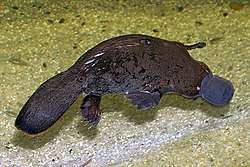
鴨嘴 (kamo no hashi): the duck-billed platypus.
| Kanji in this term | |
|---|---|
| 鴨 | 嘴 |
| かも Jinmeiyō |
はし Hyōgaiji |
| kun’yomi | |
Etymology
Compound of 鴨 (kamo, “duck”) + の (no, possessive particle) + 嘴 (hashi, “bill, beak”). The の (no) is omitted in the spelling.
The platypus sense is a partial calque of English duck-billed platypus.
Pronunciation
Noun
鴨嘴 (hiragana かものはし, katakana カモノハシ, rōmaji kamo no hashi)
- a platypus
- (Can we date this quote?) “カモノハシペリー [Perry the Platypus]” (in Japanese):
- オー ペリー カモノハシペリー!
エージェントピーと呼びまえ
ペリー!
だからエージェントPだってのに
エージェントP!- Ō Perī Kamo no Hashi Perī
Ējento Pī to oyobi mae
Perī!
Dakara Ējento Pī datte no ni
Ējento Pī! - Oh, Perry, Perry the Platypus!
But you can call him Agent P
Perry!
I said you can call him Agent P
Agent P!
- Ō Perī Kamo no Hashi Perī
- オー ペリー カモノハシペリー!
-
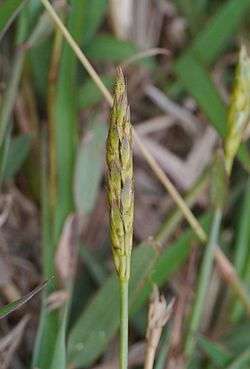
- Ischaemum aristatum var. glaucum, a kind of smutgrass or batiki bluegrass
Usage notes
As with many terms that name organisms, this term is often spelled in katakana, especially in biological contexts, as カモノハシ.
Further reading
References
This article is issued from
Wiktionary.
The text is licensed under Creative Commons - Attribution - Sharealike.
Additional terms may apply for the media files.