砼
| ||||||||
Translingual
Han character
砼 (radical 112 石+5, 10 strokes, cangjie input 一口人一 (MROM), composition ⿰石仝)
References
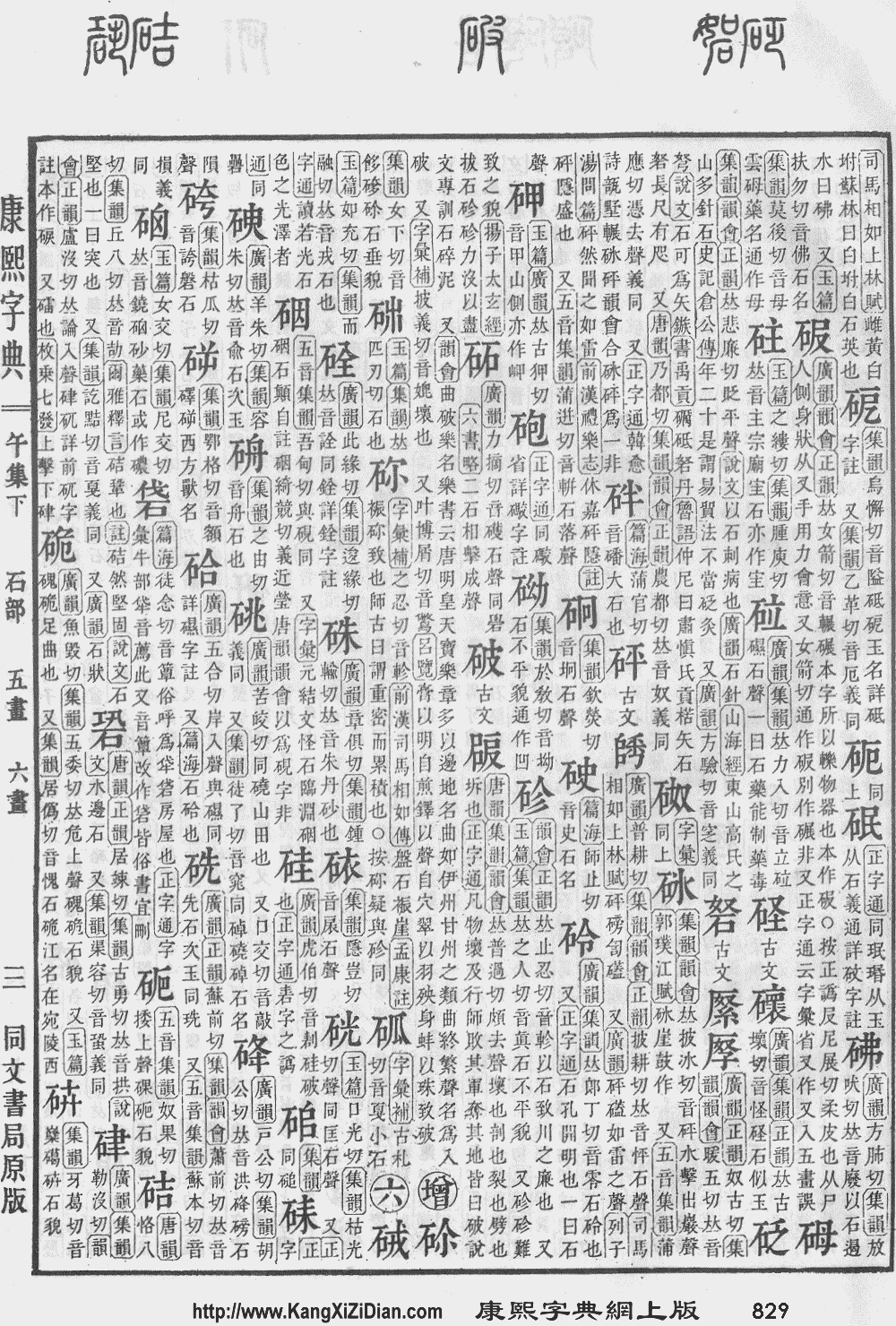
- KangXi: not present, would follow page 829, character 33
- Hanyu Da Zidian: volume 4, page 2424, character 10
- Unihan data for U+783C
Chinese
| simp. and trad. |
砼 | |
|---|---|---|
Etymology
Coined in 1953.
The glyph is a compound of 人工石 (“man-made stone”). Pronunciation is from 仝 (tóng), treated as the phonetic component of the glyph. Serendipitously, the pronunciation also resembles the word for “concrete” in some European languages; cf. French béton, German Beton, Russian бето́н (betón).
Pronunciation
Definitions
砼
This article is issued from
Wiktionary.
The text is licensed under Creative Commons - Attribution - Sharealike.
Additional terms may apply for the media files.