皴
| ||||||||
Translingual
Han character
皴 (radical 107 皮+7, 12 strokes, cangjie input 戈水木竹水 (IEDHE), four-corner 24447, composition ⿰夋皮)
References
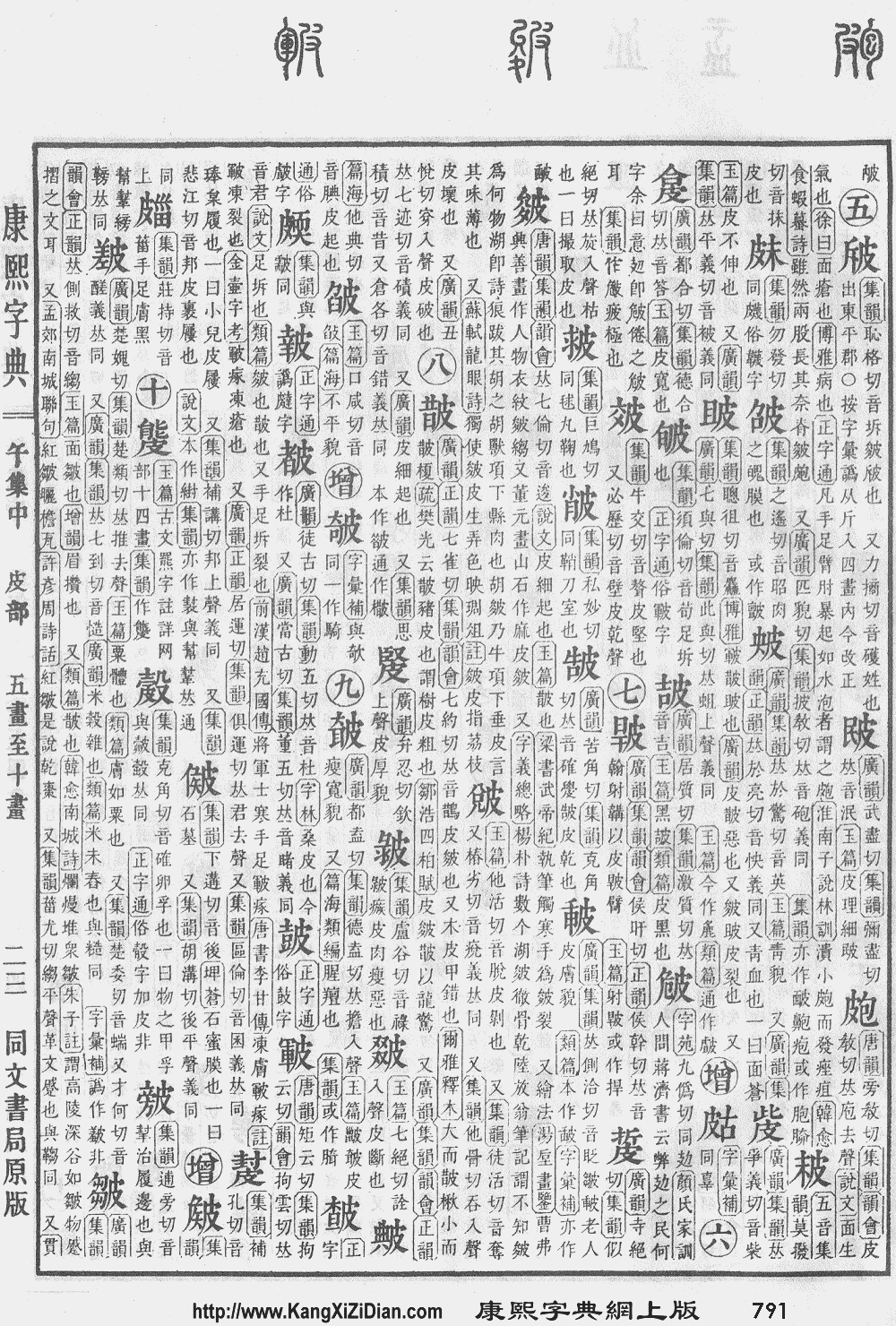
- KangXi: page 791, character 22
- Dai Kanwa Jiten: character 22866
- Dae Jaweon: page 1206, character 23
- Hanyu Da Zidian: volume 4, page 2756, character 2
- Unihan data for U+76B4
Cantonese
Hanzi
皴 (Yale seun1)
- This term needs a translation to English. Please help out and add a translation, then remove the text
{{rfdef}}.
Japanese
Kanji
皴
- This term needs a translation to English. Please help out and add a translation, then remove the text
{{rfdef}}.
Readings
Compounds
Compounds
- 荷葉皴 (kayōshun)
- 皴法 (shunpō)
- 披麻皴 (himashun)
- 斧劈皴 (fuhekishun)
| Kanji in this term |
|---|
| 皴 |
| しわ Hyōgaiji |
| kun’yomi |
Etymology
Probably from stem shiwa of verb shiwaru (撓る: “to sag, as something elastic that has lost its bounce”). Probably cognate with 皺 (shibo).
Pronunciation
Alternative forms
Noun
References
Korean
Hanja
皴 • (jun) (hangeul 준, revised jun, McCune–Reischauer chun, Yale cwun)
- This term needs a translation to English. Please help out and add a translation, then remove the text
{{rfdef}}.
Mandarin
Hanzi
皴 (Pinyin cūn (cun1), Wade-Giles ts'un1)
chapped (by the cold)
This article is issued from
Wiktionary.
The text is licensed under Creative Commons - Attribution - Sharealike.
Additional terms may apply for the media files.