坏
See also: 壞
| ||||||||
Translingual
| Traditional | 壞 |
|---|---|
| Shinjitai | 壊 |
| Simplified | 坏 |
| Stroke order | |||
|---|---|---|---|
 | |||
Etymology
Han character
坏 (radical 32, 土+4, 7 strokes, cangjie input 土一火 (GMF), four-corner 41190, composition ⿰土不)
References
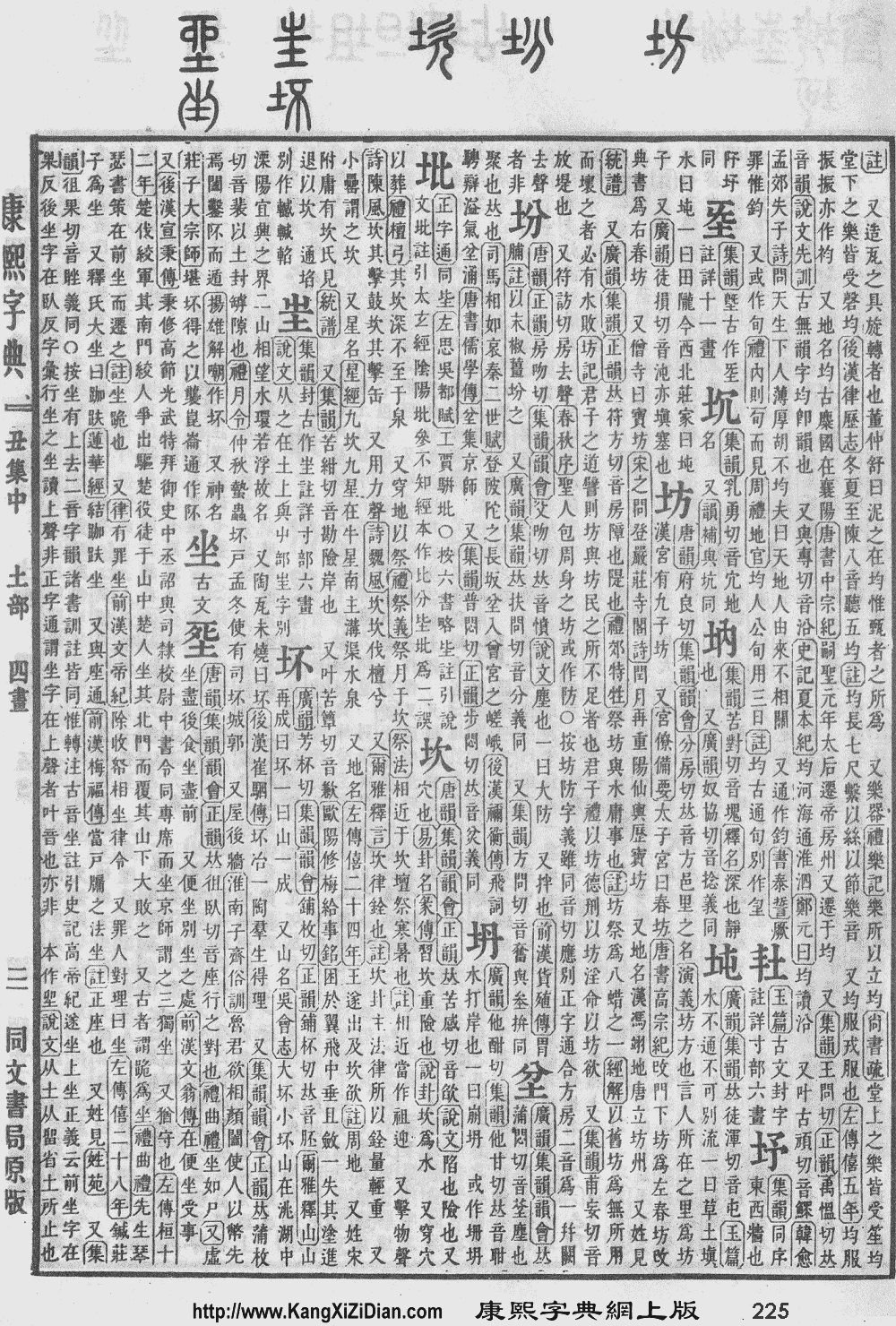
- KangXi: page 225, character 14
- Dai Kanwa Jiten: character 4930
- Dae Jaweon: page 460, character 5
- Hanyu Da Zidian: volume 1, page 421, character 11
- Unihan data for U+574F
Chinese
Etymology 1
| For pronunciation and definitions of 坏 – see 壞 (“bad; rotten; spoiled; etc.”). (This character, 坏, is the simplified form of 壞.) |
Notes:
|
Etymology 2
| For pronunciation and definitions of 坏 – see 坯 (“unburnt pottery and bricks; base; abode; etc.”). (This character, 坏, is a variant form of 坯.) |
Etymology 3
| simp. and trad. |
坏 | |
|---|---|---|
| alt. forms | 坯 | |
Pronunciation
Definitions
坏
Compounds
|
|
|
References
Japanese
Kanji
坏
Readings
Noun
- (archaic) shallow bowl
Alternative forms
坏 (hiragana さかずき, rōmaji sakazuki)
- Alternative form of 盃
Korean
Hanja
坏 • (bae) (hangeul 배, McCune–Reischauer pae)
- This term needs a translation to English. Please help out and add a translation, then remove the text
{{rfdef}}.
Vietnamese
Han character
坏 (hoại)
- This term needs a translation to English. Please help out and add a translation, then remove the text
{{rfdef}}.
This article is issued from
Wiktionary.
The text is licensed under Creative Commons - Attribution - Sharealike.
Additional terms may apply for the media files.