啐
| ||||||||
Translingual
Han character
啐 (radical 30 口+8, 11 strokes, cangjie input 口卜人十 (RYOJ), four-corner 60048, composition ⿰口卒)
- to drink, to taste
- to expectorate, to spit
- start
References
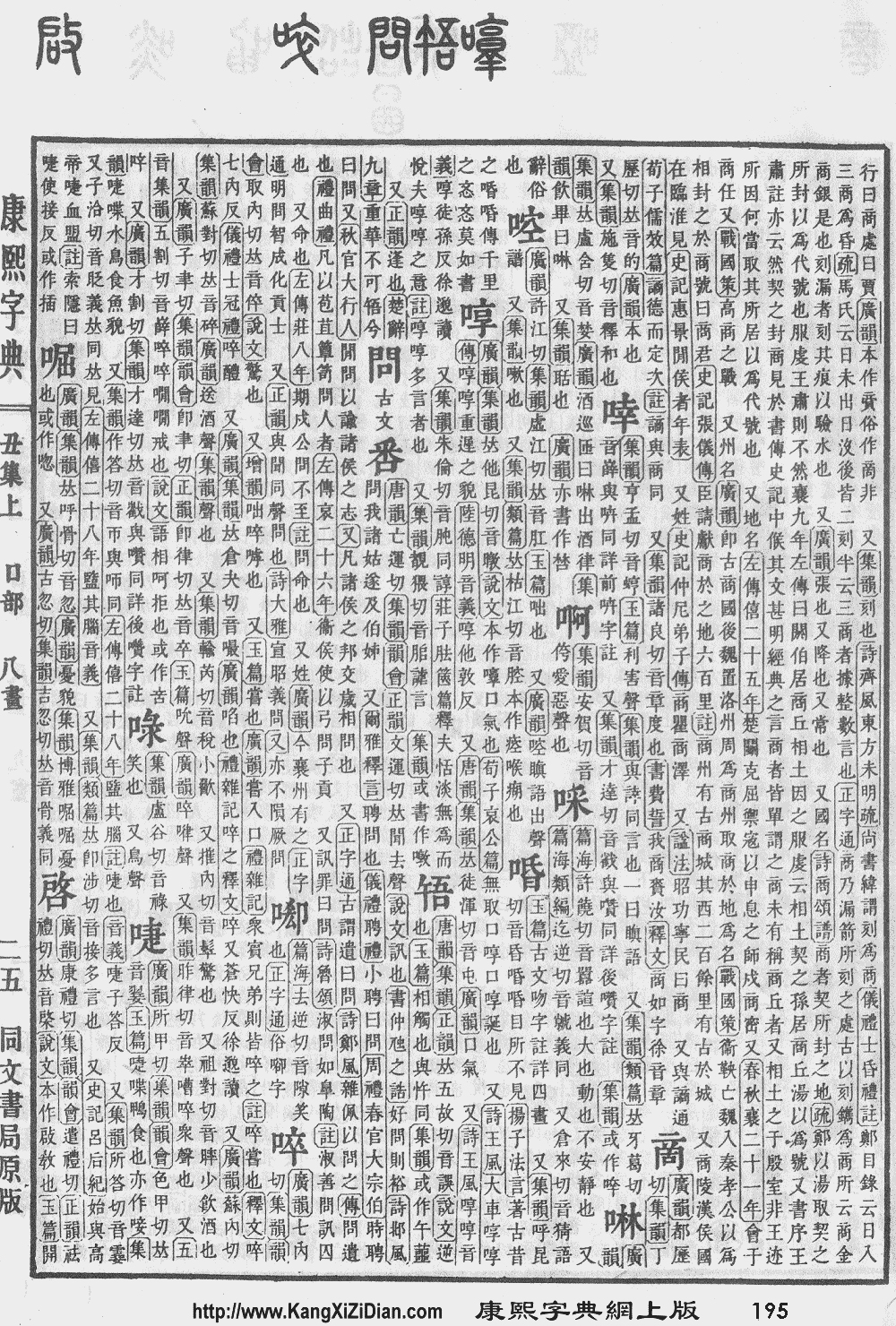
- KangXi: page 195, character 13
- Dai Kanwa Jiten: character 3816
- Dae Jaweon: page 416, character 12
- Hanyu Da Zidian: volume 1, page 645, character 3
- Unihan data for U+5550
Cantonese
Hanzi
啐 (Jyutping ceoi3, seoi6, Yale cheui3, seui6)
- This term needs a translation to English. Please help out and add a translation, then remove the text
{{rfdef}}.
Japanese
Kanji
啐
- to taste
- to sip
- to spit
- the sound of sipping
- to surprise
Readings
- Goon: すい (sui)
- Kan’on: さい (sai)
- Kan’yōon: そつ (sotsu)
- Kun: おどろく (odoroku, 啐く); さけぶ (sakebu, 啐ぶ); なめる (nameru, 啐める)
Korean
Hanja
啐 • (chwae, jul) (hangeul 쵀, 줄, revised chwae, jul, McCune–Reischauer ch'wae, chul)
- to taste
- to sip
- to spit
- the sound of sipping
- to surprise
Mandarin
Hanzi
啐 (Pinyin cuì (cui4), Wade-Giles ts'ui4)
- This term needs a translation to English. Please help out and add a translation, then remove the text
{{rfdef}}.
Vietnamese
Han character
啐 (thối, chót, chọt, chụt, nuốt, suốt, thọt, tối, thoắt, thốt, trót, trốt, tủi, vót)
- This term needs a translation to English. Please help out and add a translation, then remove the text
{{rfdef}}.
This article is issued from
Wiktionary.
The text is licensed under Creative Commons - Attribution - Sharealike.
Additional terms may apply for the media files.