䩉
| ||||||||
Translingual
Han character
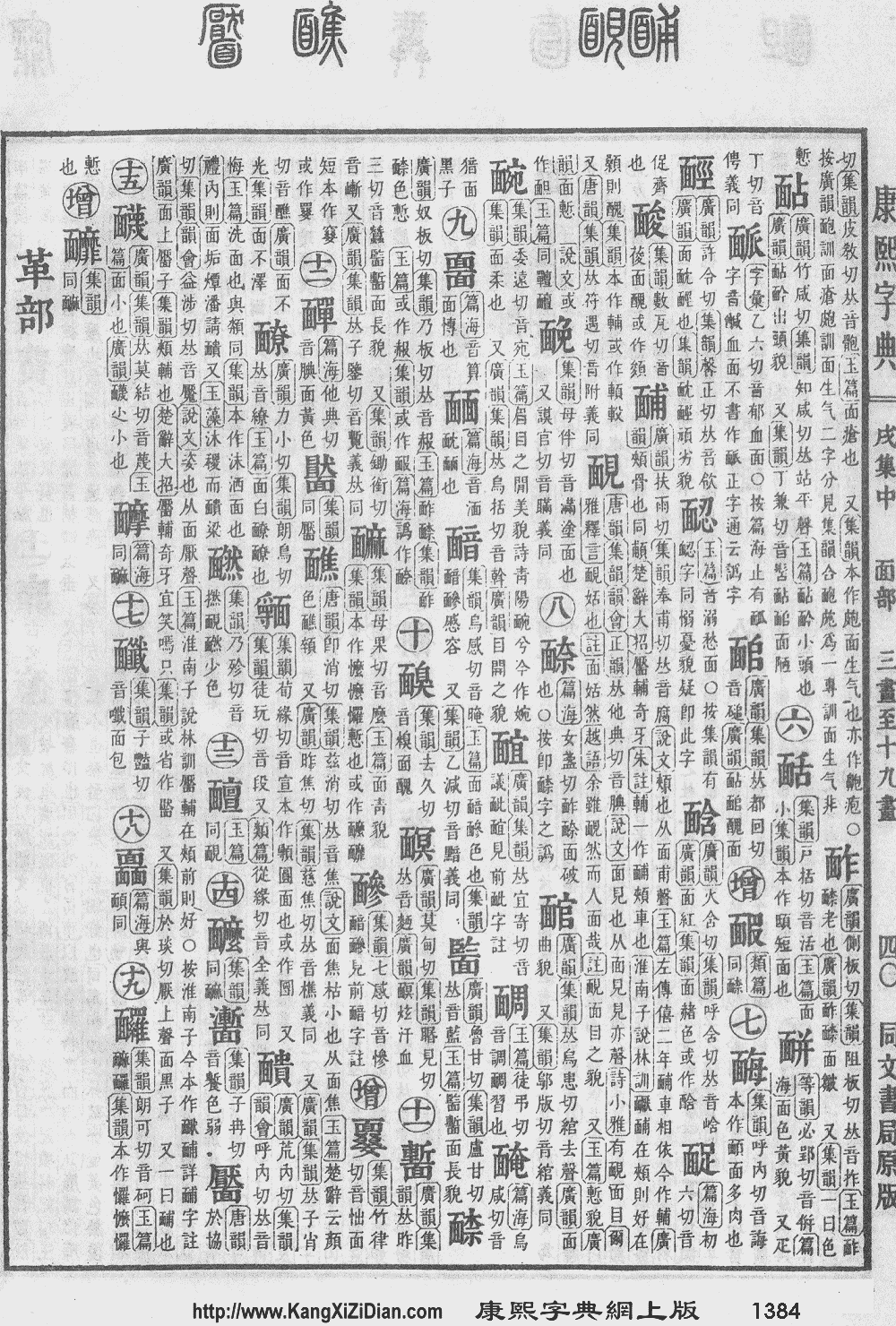
䩉 (radical 176, 面+7, 16 strokes, cangjie input 一田戈十月 (MWIJB), composition ⿰面甫)
References
- KangXi: page 1384, character 14
- Hanyu Da Zidian: volume 7, page 4400, character 10
- Unihan data for U+4A49
Cantonese
Hanzi
䩉 (Jyutping fu2, fu6, Yale fu2, fu6)
- This term needs a translation to English. Please help out and add a translation, then remove the text
{{rfdef}}.
Japanese
Kanji
䩉
Readings
Etymology 1
Cognate with 框 (kamachi, “frame”).
Pronunciation
- IPA(key): [kamatɕi]
Alternative forms
Noun
䩉 (hiragana かまち, rōmaji kamachi)
- the upper and lower jaw bones and cheek bones
- 794, Shin'yaku Kegonkyō Ongi Shiki
- 鬚髻 上栗喩反 頤毛也 倭云加末智乃比偈 又花蘂之本也 髻髪也
- 794, Shin'yaku Kegonkyō Ongi Shiki
Derived terms
Etymology 2
/kamati/ → /kabati/. Medial -m- looses nasality and becomes a plosive. Cognate with 䩉 (kamachi).
Pronunciation
- IPA(key): [kabatɕi]
Alternative forms
Noun
䩉 (hiragana かばち, rōmaji kabachi)
- the upper and lower jaw bones and cheek bones
Derived terms
- 輔 (tsurakabachi)
References
- Takeuchi, Rizō (1962) Nara Ibun: Volume 3 (in Japanese), Tōkyō: Tōkyōdō Shuppan, →ISBN.
Mandarin
Hanzi
䩉 (Pinyin fǔ (fu3), Wade-Giles fu3)
- This term needs a translation to English. Please help out and add a translation, then remove the text
{{rfdef}}.
This article is issued from
Wiktionary.
The text is licensed under Creative Commons - Attribution - Sharealike.
Additional terms may apply for the media files.