ออก
Thai
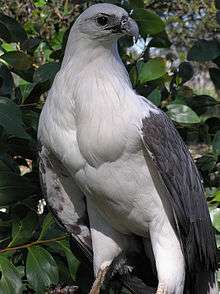
white-bellied sea eagle
Pronunciation
| Orthographic/Phonemic | ออก ɒ ɒ k | |
| Romanization | Paiboon | ɔ̀ɔk |
| Royal Institute | ok | |
| (standard) IPA(key) | /ʔɔːk̚˨˩/ | |
Etymology 1
From Proto-Tai *ʔoːkᴰ (“to exit”). Cognate with Northern Thai ᩋᩬᨠ, Lao ອອກ (’ǭk), Lü ᦀᦸᧅᧈ (q̇oak1), Shan ဢွၵ်ႇ (’òak), Ahom 𑜒𑜨𑜀𑜫 (’ok), Zhuang ok.
Verb
ออก • (ɔ̀ɔk) (abstract noun การออก)
- to pay (a monetary sum).
- to come under (a governing power).
- to come or go out, into view, or into being; to cause to come or go out, into view, or into being.
- รัฐสภาออกกฎหมายใหม่
- rát-tà-sà-paa ɔ̀ɔk gòt-mǎai mài
- The parliament has issued a new law.
- วงจะออกซิงเกิลใหม่
- wong jà ɔ̀ɔk sing-gə̂ən mài
- The band will release a new single.
- ออกมาหรือยัง
- ɔ̀ɔk maa rʉ̌ʉ yang
- Have you come out?
- ตะวันออก
- dtà-wan ɔ̀ɔk
- The sun has risen.
- ออกไป
- ɔ̀ɔk bpai
- Get out!
- ออกงาน
- ɔ̀ɔk ngaan
- To quit a job.
- รัฐสภาออกกฎหมายใหม่
Adjective
ออก • (ɔ̀ɔk)
Adverb
ออก • (ɔ̀ɔk)
Derived terms
Derived terms
|
|
Etymology 2
From Old Khmer uka, ūka, ʼaka, ʼaka, ʼagga, oka, okka (“first constituent in titles of the mandarinate”). Cognate with Modern Khmer ឧក (’ŏkâ).
Noun
ออก • (ɔ̀ɔk)
Derived terms
Derived terms
|
|
|
Etymology 3
Adjective
ออก • (ɔ̀ɔk)
- (of parents, relatives, etc, now dialect) biological; natural.
Etymology 4
Noun
ออก • (ɔ̀ɔk)
- (zoology) white-bellied sea eagle: the bird Haliaeetus leucogaster of the family Accipitridae.
This article is issued from
Wiktionary.
The text is licensed under Creative Commons - Attribution - Sharealike.
Additional terms may apply for the media files.