ريحان
See also: ریحان
Arabic
Etymology
Noun
رَيْحَان • (rayḥān) m (collective, singulative رَيْحَانَة (rayḥāna), plural رَيَاحِين (rayāḥīn))
- (botany) basil
- fragrant plant, aromatic
- 7th century CE, The Quran:
- وَٱلْأَرْضَ وَضَعَهَا لِلْأَنَامِ / فِيهَا فَاكِهَةٌ وَٱلنَّخْلُ ذَاتُ ٱلْأَكْمَامِ / وَٱلْحَبُّ ذُو ٱلْعَصْفِ وَٱلرَّيْحَانُ
- wal-ʾarḍa waḍaʿahā lilʾanāmi / fīhā fākihatun wan-naḵlu ḏātu l-ʾakmāmi / wal-ḥabbu ḏū l-ʿaṣfi war-rayḥānu
- And the earth has He spread out for all living beings, with fruit thereon, and palm trees with sheathed clusters [of dates], and grain growing tall on its stalks, and sweet-smelling plants.
- وَٱلْأَرْضَ وَضَعَهَا لِلْأَنَامِ / فِيهَا فَاكِهَةٌ وَٱلنَّخْلُ ذَاتُ ٱلْأَكْمَامِ / وَٱلْحَبُّ ذُو ٱلْعَصْفِ وَٱلرَّيْحَانُ
-
Declension
Declension of noun رَيْحَان (rayḥān)
| Collective | basic collective triptote | ||
|---|---|---|---|
| Indefinite | Definite | Construct | |
| Informal | رَيْحَان rayḥān |
الرَّيْحَان ar-rayḥān |
رَيْحَان rayḥān |
| Nominative | رَيْحَانٌ rayḥānun |
الرَّيْحَانُ ar-rayḥānu |
رَيْحَانُ rayḥānu |
| Accusative | رَيْحَانًا rayḥānan |
الرَّيْحَانَ ar-rayḥāna |
رَيْحَانَ rayḥāna |
| Genitive | رَيْحَانٍ rayḥānin |
الرَّيْحَانِ ar-rayḥāni |
رَيْحَانِ rayḥāni |
| Singulative | singulative triptote in ـَة (-a) | ||
| Indefinite | Definite | Construct | |
| Informal | رَيْحَانَة rayḥāna |
الرَّيْحَانَة ar-rayḥāna |
رَيْحَانَة rayḥānat |
| Nominative | رَيْحَانَةٌ rayḥānatun |
الرَّيْحَانَةُ ar-rayḥānatu |
رَيْحَانَةُ rayḥānatu |
| Accusative | رَيْحَانَةً rayḥānatan |
الرَّيْحَانَةَ ar-rayḥānata |
رَيْحَانَةَ rayḥānata |
| Genitive | رَيْحَانَةٍ rayḥānatin |
الرَّيْحَانَةِ ar-rayḥānati |
رَيْحَانَةِ rayḥānati |
| Dual | Indefinite | Definite | Construct |
| Informal | رَيْحَانَتَيْن rayḥānatayn |
الرَّيْحَانَتَيْن ar-rayḥānatayn |
رَيْحَانَتَيْ rayḥānatay |
| Nominative | رَيْحَانَتَانِ rayḥānatāni |
الرَّيْحَانَتَانِ ar-rayḥānatāni |
رَيْحَانَتَا rayḥānatā |
| Accusative | رَيْحَانَتَيْنِ rayḥānatayni |
الرَّيْحَانَتَيْنِ ar-rayḥānatayni |
رَيْحَانَتَيْ rayḥānatay |
| Genitive | رَيْحَانَتَيْنِ rayḥānatayni |
الرَّيْحَانَتَيْنِ ar-rayḥānatayni |
رَيْحَانَتَيْ rayḥānatay |
| Paucal (3-10) | sound feminine paucal | ||
| Indefinite | Definite | Construct | |
| Informal | رَيْحَانَات rayḥānāt |
الرَّيْحَانَات ar-rayḥānāt |
رَيْحَانَات rayḥānāt |
| Nominative | رَيْحَانَاتٌ rayḥānātun |
الرَّيْحَانَاتُ ar-rayḥānātu |
رَيْحَانَاتُ rayḥānātu |
| Accusative | رَيْحَانَاتٍ rayḥānātin |
الرَّيْحَانَاتِ ar-rayḥānāti |
رَيْحَانَاتِ rayḥānāti |
| Genitive | رَيْحَانَاتٍ rayḥānātin |
الرَّيْحَانَاتِ ar-rayḥānāti |
رَيْحَانَاتِ rayḥānāti |
| Plural of variety | basic broken plural diptote | ||
| Indefinite | Definite | Construct | |
| Informal | رَيَاحِين rayāḥīn |
الرَّيَاحِين ar-rayāḥīn |
رَيَاحِين rayāḥīn |
| Nominative | رَيَاحِينُ rayāḥīnu |
الرَّيَاحِينُ ar-rayāḥīnu |
رَيَاحِينُ rayāḥīnu |
| Accusative | رَيَاحِينَ rayāḥīna |
الرَّيَاحِينَ ar-rayāḥīna |
رَيَاحِينَ rayāḥīna |
| Genitive | رَيَاحِينَ rayāḥīna |
الرَّيَاحِينِ ar-rayāḥīni |
رَيَاحِينِ rayāḥīni |
Descendants
- Armenian: ռեհան (ṙehan)
- Azerbaijani: reyhan
- Georgian: რეჰანი (rehani)
- Northern Kurdish: riḧan, rihan, rehan, reyhan, rêhan, rêhane
- Middle Armenian: ռահան (ṙahan), ըռահան (əṙahan), ռէհան (ṙēhan)
- Ottoman Turkish: ریحان (reyhân; Reyhân), ریاحین pl (reyâhîn)
- Persian: ریحان (reyhân; Reyhân), ریاحین pl (rayâhin), ریحانه (Reyhâne)
- Udi: ираьгьаьн (irähän)
Hijazi Arabic
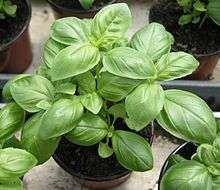
ريحان
Etymology
Pronunciation
- IPA(key): /reːħaːn/, /riːħaːn/
Noun
ريحان • (rēḥān or rīḥān) m
(plural رَياحين (rayāḥīn))
See also
- حَبَق (ḥabag, “Ocimum (taxonomic plant genus)”)
This article is issued from
Wiktionary.
The text is licensed under Creative Commons - Attribution - Sharealike.
Additional terms may apply for the media files.