ursus
See also: Ursus
Latin
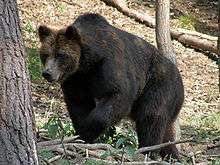
ursus (a bear)
Etymology
From Proto-Italic *orssos, from Proto-Indo-European *h₂ŕ̥tḱos (“bear”). Cognates include Ancient Greek ἄρκτος (árktos), Persian خرس (xers) and Sanskrit ऋक्ष (ṛ́kṣa).
Pronunciation
- (Classical) IPA(key): /ˈur.sus/, [ˈʊr.sʊs]
-
Audio (Classical) (file)
Noun
ursus m (genitive ursī); second declension
- a bear
Inflection
Second declension.
| Case | Singular | Plural |
|---|---|---|
| nominative | ursus | ursī |
| genitive | ursī | ursōrum |
| dative | ursō | ursīs |
| accusative | ursum | ursōs |
| ablative | ursō | ursīs |
| vocative | urse | ursī |
Derived terms
Descendants
References
- ursus in Charlton T. Lewis and Charles Short (1879) A Latin Dictionary, Oxford: Clarendon Press
- ursus in Charlton T. Lewis (1891) An Elementary Latin Dictionary, New York: Harper & Brothers
- ursus in Gaffiot, Félix (1934) Dictionnaire Illustré Latin-Français, Hachette
- ursus in Harry Thurston Peck, editor (1898) Harper's Dictionary of Classical Antiquities, New York: Harper & Brothers
- ursus in William Smith, editor (1848) A Dictionary of Greek Biography and Mythology, London: John Murray
This article is issued from
Wiktionary.
The text is licensed under Creative Commons - Attribution - Sharealike.
Additional terms may apply for the media files.