plinth
English
Etymology
From French plinthe, from Latin plinthus, from Ancient Greek πλίνθος (plínthos, “brick”)
Pronunciation
- IPA(key): /plɪnθ/
- Rhymes: -ɪnθ
Noun
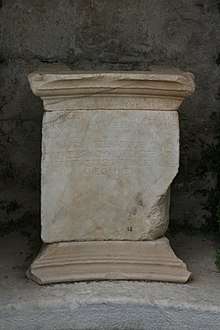
A Plinth.
plinth (plural plinths)
- A block or slab upon which a column, pedestal, statue or other structure is based.
- 1963, Margery Allingham, “Foreword”, in The China Governess:
- He turned back to the scene before him and the enormous new block of council dwellings. The design was some way after Corbusier but the block was built up on plinths and resembled an Atlantic liner swimming diagonally across the site.
-
- The bottom course of stones or bricks supporting a wall.
- A base or pedestal beneath a cabinet.
- A base for a songlist.
Translations
base for column, pedestal or statue
bottom course of stones supporting a wall
This article is issued from
Wiktionary.
The text is licensed under Creative Commons - Attribution - Sharealike.
Additional terms may apply for the media files.