hest
See also: heşt
English
Etymology
From Middle English, alteration of Middle English hes, from Old English hǣs (“command”). Akin to Old English hātan "to command". More at hight.
Pronunciation
- IPA(key): /hɛst/
- Rhymes: -ɛst
Noun
hest (plural hests)
- (obsolete) Command, injunction.
- 1610, The Tempest, by Shakespeare, act 3 scene 1
- FERDINAND: […] What is your name?
- MIRANDA. Miranda — O my father! / I have broke your hest to say so.
- 1610, The Tempest, by Shakespeare, act 3 scene 1
Related terms
Translations
command, injunction
|
Anagrams
Danish
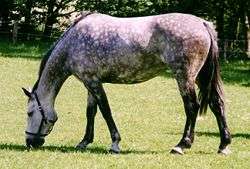
hest
Etymology
From Old Norse hestr (“stallion”), from Proto-Germanic *hangistaz. Cognate to hingst (“stallion”).
Pronunciation
- IPA(key): /hɛst/, [hɛsd̥]
Noun
hest c (singular definite hesten, plural indefinite heste)
Inflection
Derived terms
References
- “hest” in Den Danske Ordbog
Faroese
Pronunciation
Noun
hest
- indefinite accusative singular of hestur
Icelandic
Noun
hest
- indefinite accusative singular of hestur
Norwegian Bokmål
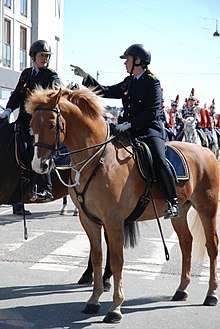
Politi på hest i København, Danmark
Etymology 1
Adjective
hest
- neuter singular of hes
Etymology 2
From Old Norse hestr, from Proto-Germanic *hangistaz.
Noun
hest m (definite singular hesten, indefinite plural hester, definite plural hestene)
- a horse
Derived terms
Terms derived from hest
References
- “hest” in The Bokmål Dictionary.
Norwegian Nynorsk
Etymology
From Old Norse hestr, from Proto-Germanic *hangistaz.
Noun
hest m (definite singular hesten, indefinite plural hestar, definite plural hestane)
- a horse
Derived terms
Terms derived from hest
References
- “hest” in The Nynorsk Dictionary.
Zazaki
Alternative forms
Numeral
hest
This article is issued from
Wiktionary.
The text is licensed under Creative Commons - Attribution - Sharealike.
Additional terms may apply for the media files.