grön
German Low German
Alternative forms
Etymology
From Old Saxon grōni, from Proto-Germanic *grōniz. Compare German grün, Dutch groen.
Pronunciation
- (in some dialects) IPA(key): /ɡɾœɪ̯n/
Adjective
grön
Swedish
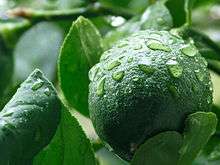
Unripe Meyer Lemon
Etymology
From Old Swedish grø̄n, from Old Norse grœnn, from Proto-Germanic *grōniz (compare with Danish grøn, Dutch groen, English green and German grün), ultimately from Proto-Indo-European *gʰrōni-, from Proto-Indo-European *gʰreh₁- (“to grow”).
Pronunciation
- IPA(key): /ɡrøːn/
-
audio (file)
Adjective
grön (comparative grönare, superlative grönast)
- of the color green
- (politics) related to a Green Party
- looking sick
- inexperienced
- approved
- jealous
- Grön av avund. (confer the synonymous Icelandic grænn af öfund)
- Green with envy.
- Grön av avund. (confer the synonymous Icelandic grænn af öfund)
Conjugation
| Inflection of grön | |||
|---|---|---|---|
| Indefinite | Positive | Comparative | Superlative2 |
| Common singular | grön | grönare | grönast |
| Neuter singular | grönt | grönare | grönast |
| Plural | gröna | grönare | grönast |
| Definite | Positive | Comparative | Superlative |
| Masculine singular1 | gröne | grönare | grönaste |
| All | gröna | grönare | grönaste |
| 1) Only used, optionally, to refer to things whose natural gender is masculine. 2) The indefinite superlative forms are only used in the predicative. | |||
See also
- det är grönt
- grönbete
- gröngöling
- grönsak
- på grön kvist
This article is issued from
Wiktionary.
The text is licensed under Creative Commons - Attribution - Sharealike.
Additional terms may apply for the media files.