fulmine
See also: fulminé
English
Etymology
From French fulminer, from Latin fulminō (“lighten, illuminate”). More at fulminate.
Verb
fulmine (third-person singular simple present fulmines, present participle fulmining, simple past and past participle fulmined)
- (archaic) To thunder or lightning.
- 1590, Edmund Spenser, The Faerie Queene, III.2:
- And ever and anone the rosy red / Flasht through her face, as it had been a flake / Of lightning through bright heven fulmined […]
- 1590, Edmund Spenser, The Faerie Queene, III.2:
- (archaic, figuratively) To utter with authority or vehemence; fulminate.
- Tennyson
- She fulmined out her scorn of laws Salique.
- Tennyson
Anagrams
French
Pronunciation
Verb
fulmine
- first-person singular present indicative of fulminer
- third-person singular present indicative of fulminer
- first-person singular present subjunctive of fulminer
- first-person singular present subjunctive of fulminer
- second-person singular imperative of fulminer
Italian
Etymology
Pronunciation
- IPA(key): /ˈful.mi.ne/, [ˈful̺min̺e]
- Rhymes: -ulmine
- Hyphenation: fùl‧mi‧ne
Noun
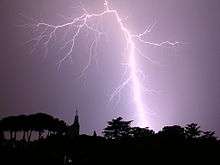
fulmine m (plural fulmini)
Synonyms
Related terms
See also
Latin
Noun
fulmine
- ablative singular of fulmen
Spanish
Verb
fulmine
- Formal second-person singular (usted) imperative form of fulminar.
- First-person singular (yo) present subjunctive form of fulminar.
- Formal second-person singular (usted) present subjunctive form of fulminar.
- Third-person singular (él, ella, also used with usted?) present subjunctive form of fulminar.
This article is issued from
Wiktionary.
The text is licensed under Creative Commons - Attribution - Sharealike.
Additional terms may apply for the media files.