caron
English
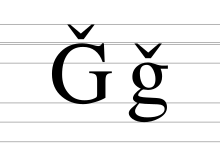
The letter "G" with a caron.
Etymology
Etymology unknown; first known use is the United States Government Printing Office Style Manual of 1967, where it apparently referred to an inverted caret. Possibly derived from caret after its similar shape (^), and with -on either from macron or as an augmentative after reanalysis of -et as a diminutive.
Pronunciation
- IPA(key): /ˈkæɹən/
- Homophone: Karen
Noun
caron (plural carons)
Usage notes
The term caron gained usage through the computer world, through usage at Adobe and later in Unicode. As such, it is the most common name in many computer environments, whereas some form of háček is more common in linguistic circles.
Translations
háček diacritic — see háček
Anagrams
Esperanto
Noun
caron
- accusative singular of caro
French

caron
Pronunciation
- IPA(key): /ka.ʁɔ̃/
Noun
caron m (plural carons)
- háček (the háček diacritic)
Anagrams
Latin
Noun
caron
- accusative singular of caros
Welsh
Alternative forms
- carasom (literary, first-person plural)
- carasant (literary, third-person plural)
Pronunciation
- (North Wales) IPA(key): /ˈkarɔn/
- (South Wales) IPA(key): /ˈkaːrɔn/, /ˈkarɔn/
Verb
caron
Mutation
| Welsh mutation | |||
|---|---|---|---|
| radical | soft | nasal | aspirate |
| caron | garon | ngharon | charon |
| Note: Some of these forms may be hypothetical. Not every possible mutated form of every word actually occurs. | |||
This article is issued from
Wiktionary.
The text is licensed under Creative Commons - Attribution - Sharealike.
Additional terms may apply for the media files.