brinjal
English
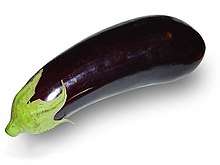
brinjal
Alternative forms
Etymology
From Portuguese brinjela, ultimately from Sanskrit भण्टाकी (bhaṇṭākī, “aubergine”). Sanskrit word is likely of Dravidian origin, from the source that also ultimately gave aubergine.
Noun
brinjal (plural brinjals)
- (India, Malaysia, Pakistan) An aubergine or eggplant.
- 1858, George Trevor, India, an historical sketch, page 14:
- Hindustan produces abundance of wheat, and throughout India the natives are plentifully supplied with vegetables and fruit; the brinjal, tomato, yam, carrot, radish, onion, garlic, spinach cabbage, nowkohl, cucumbers, and other gourds, may be mentioned among the former
-
Synonyms
- see the list in the entry eggplant
Related terms
Translations
an aubergine — see eggplant
References
- 1810, John Richardson, Sir Charles Wilkins, David Hopkins, A vocabulary, Persian, Arabic, and English: abridged from the quarto edition, page 87
- 1903, Yule, Henry, Sir. Hobson-Jobson: A glossary of colloquial Anglo-Indian words and phrases, and of kindred terms, etymological, historical, geographical and discursive. New ed. edited by William Crooke, B.A. London: J. Murray, p. 115-116
- 2003, “Three Pandits”. Learn Telugu through English in One Month 1st ed. page 63
- 2009, Ranga Rao. Learn Kannada in 30 Days 27th ed. page 43
This article is issued from
Wiktionary.
The text is licensed under Creative Commons - Attribution - Sharealike.
Additional terms may apply for the media files.