allemand
English
Noun
allemand
- Misspelling of allemande.
French
Etymology
From Late Latin Alamannus or Alemannus (related to Alamans, ancient Germanic people for whom the name meant "all men", "all people", according to Asinius Quadratus). aleman became alemant by the addition of a terminal T of the singular objective case for adjectives of second class in Old French, and then alemand. The Latin word itself derives from the Old High German Alaman, from a Proto-Germanic *Alamanniz, likely from the roots *allaz (whence English all) and *manniz < *mann- (whence English man).
Pronunciation
- IPA(key): /al.mɑ̃/
Audio (Parisian) (file)
Noun
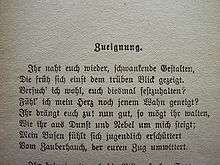
A text in German (allemand) written by Goethe.
allemand m (plural allemands)
- German (The German language)
- Synonyms: langue de Goethe, langue de Charlemagne, langue des Francs
- L’allemand est une langue germanique. ― German is a Germanic language.
- Mon stagiaire parle un allemand impeccable. ― My trainee speaks perfect German.
- Parlez-vous allemand ? ― Do you speak German?
Hypernyms
- langue
- langue germanique
Derived terms
Terms derived from allemand
|
|
Adjective
allemand (feminine singular allemande, masculine plural allemands, feminine plural allemandes)
- German (related to or originating from Germany)
- J’ai acheté une voiture allemande. ― I've bought a German car.
- Les contes allemands sont fameux. ― German fairy tales are famous.
- German (related to the German language)
- Il n’y a pas qu’en Allemagne qu’on utilise des mots allemands. ― Not only in Germany does one use German words.
- La traduction allemande de France est Frankreich. ― The German translation of "France" is Frankreich.
Related terms
Terms related to allemand
See also
Further reading
- “allemand” in le Trésor de la langue française informatisé (The Digitized Treasury of the French Language).
This article is issued from
Wiktionary.
The text is licensed under Creative Commons - Attribution - Sharealike.
Additional terms may apply for the media files.