阝
| ||||||||
Translingual
| Stroke order | |||
|---|---|---|---|
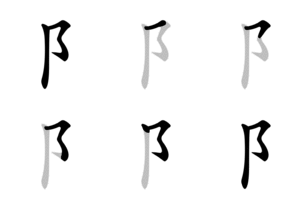 | |||
Glyph origin
阝 is the combining form of two distinct radicals, distinguished by whether it is on the left or right of a character. It is the combining form of 阜 when used on the left of a character, as in 阪, and of 邑 when used on the right of a character, as in 部.
Han character
阝 (radical 170 阜+0, in Chinese 2 strokes, in Japanese 3 strokes, cangjie input 弓中 (NL) or XX弓中 (XXNL))
- KangXi radical 170
Derived characters
- Index:Chinese radical/阜 (as left radical)
- Index:Chinese radical/邑 (as right radical)
Usage notes
Note that the character is counted as three strokes in Japanese.
References
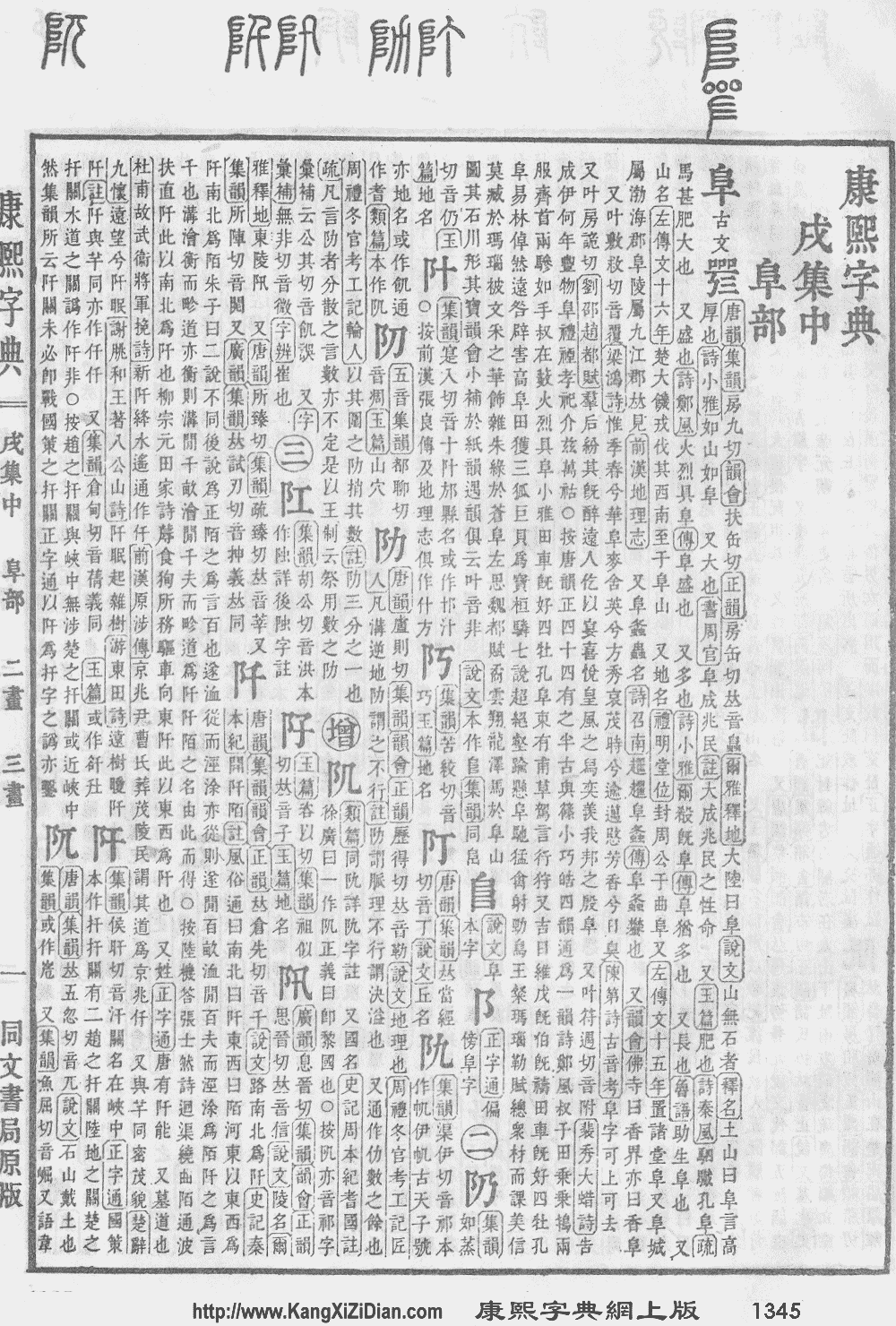
- KangXi: page 1345, character 4
- Dai Kanwa Jiten: character 41536
- Dae Jaweon: page 1847, character 27
- Hanyu Da Zidian: volume 6, page 4114, character 3
- Unihan data for U+961D
Chinese
| simp. and trad. |
阝 | |
|---|---|---|
Etymology 1
Pronunciation
Definitions
阝
- 阜 as left radical (左耳刀兒/左耳刀儿) (zuǒ'ěrdāor).
Etymology 2
Pronunciation
Definitions
阝
- 邑 as right radical (右耳刀兒/右耳刀儿) (yòu'ěrdāor).
Usage notes
Also known as 雙耳旁兒/双耳旁儿 (shuāng'ěrpángér) or 雙耳刀兒/双耳刀儿 (shuāng'ěrdāoér) when referring to the radical written on either side of a character.
Japanese
Kanji
阝
- This term needs a translation to English. Please help out and add a translation, then remove the text
{{rfdef}}.
Readings
Korean
Hanja
阝 • (bu) (hangeul 부, revised bu, McCune–Reischauer pu, Yale pu)
- This term needs a translation to English. Please help out and add a translation, then remove the text
{{rfdef}}.
Vietnamese
Han character
- This term needs a translation to English. Please help out and add a translation, then remove the text
{{rfdef}}.
This article is issued from
Wiktionary.
The text is licensed under Creative Commons - Attribution - Sharealike.
Additional terms may apply for the media files.