轘
| ||||||||
Translingual
Etymology
Phono-semantic compound (形聲, OC *ɡʷraːn, *ɡʷraːns) : semantic 車 (“carriage”) + phonetic 睘 (OC *ɡʷeŋ)
Han character
轘 (radical 159 車+13, 20 strokes, cangjie input 十十田中女 (JJWLV), four-corner 56032, composition ⿰車睘)
- tear asunder between chariots
References
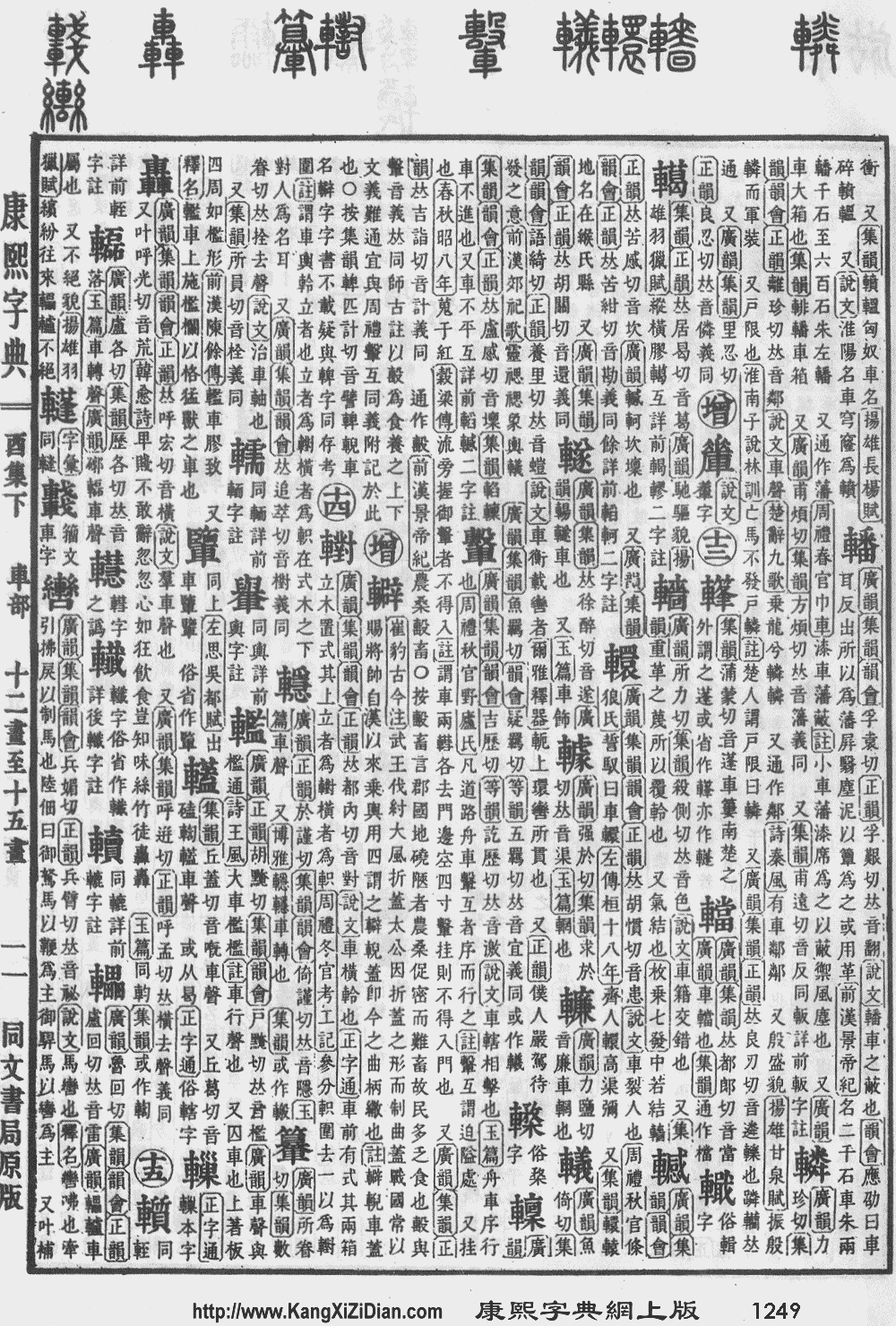
- KangXi: page 1249, character 10
- Dai Kanwa Jiten: character 38551
- Dae Jaweon: page 1728, character 1
- Hanyu Da Zidian: volume 5, page 3558, character 11
- Unihan data for U+8F58
Cantonese
Hanzi
轘 (Jyutping waan6, Yale waan6)
- This term needs a translation to English. Please help out and add a translation, then remove the text
{{rfdef}}.
Japanese
Kanji
轘
- tearing someone in two by tying their legs to two carts moving in opposite directions (form of medieval punishment)
Readings
Korean
Hanja
轘 • (hwan) (hangeul 환, revised hwan, McCune–Reischauer hwan, Yale hwan)
- This term needs a translation to English. Please help out and add a translation, then remove the text
{{rfdef}}.
Mandarin
Hanzi
轘 (Pinyin huàn (huan4), Wade-Giles huan4)
- This term needs a translation to English. Please help out and add a translation, then remove the text
{{rfdef}}.
This article is issued from
Wiktionary.
The text is licensed under Creative Commons - Attribution - Sharealike.
Additional terms may apply for the media files.