Ἄνουβις
Ancient Greek
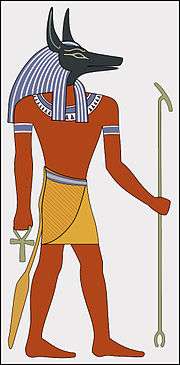
Ἄνουβις
Etymology
|


Pronunciation
- (5th BCE Attic) IPA(key): /á.noː.bis/
- (1st CE Egyptian) IPA(key): /ˈa.nu.bis/
- (4th CE Koine) IPA(key): /ˈa.nu.βis/
- (10th CE Byzantine) IPA(key): /ˈa.nu.vis/
- (15th CE Constantinopolitan) IPA(key): /ˈa.nu.vis/
Proper noun
Ἄνουβις • (Ánoubis) m (genitive Ἀνούβιδος); third declension
Inflection
| Case / # | Singular | ||||||||||||
|---|---|---|---|---|---|---|---|---|---|---|---|---|---|
| Nominative | ὁ Ἄνουβῐς ho Ánoubis | ||||||||||||
| Genitive | τοῦ Ἀνούβῐδος toû Anoúbidos | ||||||||||||
| Dative | τῷ Ἀνούβῐδῐ tôi Anoúbidi | ||||||||||||
| Accusative | τὸν Ἀνούβῐδᾰ tòn Anoúbida | ||||||||||||
| Vocative | Ἄνουβῐ Ánoubi | ||||||||||||
| Notes: | This table gives Attic inflectional endings. For declension in other dialects, see Appendix:Ancient Greek dialectal declension.
Nominative singular -ς (-s) arose by reduction of the original cluster *-ds. | ||||||||||||
This article is issued from
Wiktionary.
The text is licensed under Creative Commons - Attribution - Sharealike.
Additional terms may apply for the media files.