สามเณร
Thai
1
1
Etymology
From Pali sāmaṇera (“novice”); perhaps via Angkorian Old Khmer sāmaṇera (“novice monk”). Compare Old Khmer sāmanera, samnera, saṃnera, saṃṇera, saṃmnera, saṃnœra, saṃmnœra, srāmanera; Modern Khmer សាមណេរ (saamaʾnee); Sanskrit श्रामणेर (śrāmaṇera).
Pronunciation
| Orthographic | สามเณร s ā m e ɳ r | |
| Phonemic | สาม-มะ-เนน s ā m – m a – e n n | |
| Romanization | Paiboon | sǎam-má-neen |
| Royal Institute | sam-ma-nen | |
| (standard) IPA(key) | /saːm˩˩˦.ma˦˥.neːn˧/ | |
Noun
สามเณร • (sǎam-má-neen) (classifier ตน or รูป or องค์)
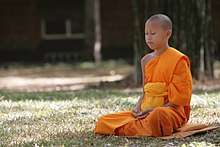
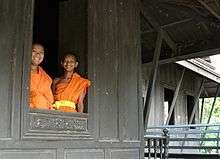
- (Buddhism) sāmaṇera: ordained male who merely observes 10 precepts, as opposed to ภิกษุ (pík-sù) who observes 227 precepts.
Usage notes
Derived terms
- เณร (neen)
- สามเณรี
This article is issued from
Wiktionary.
The text is licensed under Creative Commons - Attribution - Sharealike.
Additional terms may apply for the media files.