ओष्ठ
Sanskrit
Etymology
From Proto-Indo-European *h₃éh₁os (“mouth”). Cognate with Old Church Slavonic оуста (usta), Latin ōs, Hittite 𒀀𒄿𒅖. See also आस् (ā́s, “mouth”).
Pronunciation
Noun
ओष्ठ • (óṣṭha) m
- lip (generally in dual)
- c. 1700 BCE – 1200 BCE, Ṛgveda 2.39.6
- ओष्ठाविव मध्वास्ने वदन्ता स्तनाविव पिप्यतं जीवसे नः।
नासेव नस्तन्वो रक्षितारा कर्णाविव सुश्रुता भूतमस्मे॥- oṣṭhāviva madhvāsne vadantā stanāviva pipyataṃ jīvase naḥ.
nāseva nastanvo rakṣitārā karṇāviva suśrutā bhūtamasme.
- Even as two lips that with the mouth speak honey, even as two breasts that nourish our existence,
Like the two nostrils that protect our being, be to us as our ears that hear distinctly.
- oṣṭhāviva madhvāsne vadantā stanāviva pipyataṃ jīvase naḥ.
- ओष्ठाविव मध्वास्ने वदन्ता स्तनाविव पिप्यतं जीवसे नः।
- the forepart of an Agnikuṇḍa
Declension
| Masculine a-stem declension of ओष्ठ | |||
|---|---|---|---|
| Nom. sg. | ओष्ठः (oṣṭhaḥ) | ||
| Gen. sg. | ओष्ठस्य (oṣṭhasya) | ||
| Singular | Dual | Plural | |
| Nominative | ओष्ठः (oṣṭhaḥ) | ओष्ठौ (oṣṭhau) | ओष्ठाः (oṣṭhāḥ) |
| Vocative | ओष्ठ (oṣṭha) | ओष्ठौ (oṣṭhau) | ओष्ठाः (oṣṭhāḥ) |
| Accusative | ओष्ठम् (oṣṭham) | ओष्ठौ (oṣṭhau) | ओष्ठान् (oṣṭhān) |
| Instrumental | ओष्ठेन (oṣṭhena) | ओष्ठाभ्याम् (oṣṭhābhyām) | ओष्ठैः (oṣṭhaiḥ) |
| Dative | ओष्ठाय (oṣṭhāya) | ओष्ठाभ्याम् (oṣṭhābhyām) | ओष्ठेभ्यः (oṣṭhebhyaḥ) |
| Ablative | ओष्ठात् (oṣṭhāt) | ओष्ठाभ्याम् (oṣṭhābhyām) | ओष्ठेभ्यः (oṣṭhebhyaḥ) |
| Genitive | ओष्ठस्य (oṣṭhasya) | ओष्ठयोः (oṣṭhayoḥ) | ओष्ठानाम् (oṣṭhānām) |
| Locative | ओष्ठे (oṣṭhe) | ओष्ठयोः (oṣṭhayoḥ) | ओष्ठेषु (oṣṭheṣu) |
Derived terms
- ओष्ठ्य (oṣṭhya)
Descendants
Noun
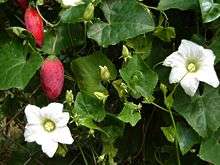
Coccinia grandis in fruit
ओष्ठ • (oṣṭha) f
- (botany) Coccinia grandis (to whose red fruits lips are commonly compared)
References
- Monier-Williams Sanskrit-English Dictionary, page 236

This article is issued from
Wiktionary.
The text is licensed under Creative Commons - Attribution - Sharealike.
Additional terms may apply for the media files.