13
5
Bitcoin miner mines a block, which can't be submitted to the network without proof of work. And the new block contains all of the new transactions. Hence the new block acts as a security measure, and authority.
My puzzle is following: In the scenario I just described, the miner of the new block, in some sense, authorized the new transactions to be true. Yet the miner has never looked into the new transaction he just authorized.
This somehow relates to orphaned blocks, and longest chain(?)
Links I found useful to help me understand:





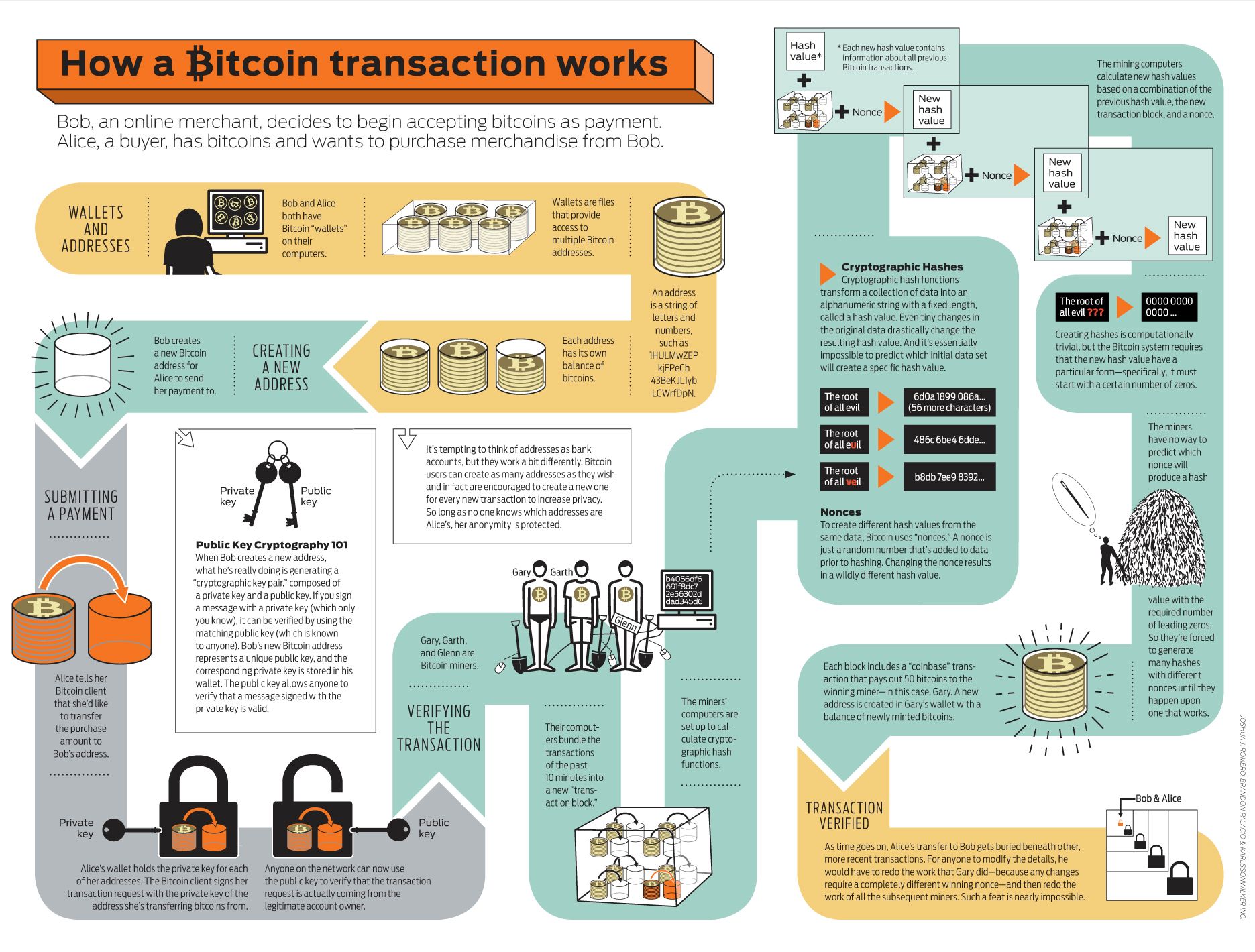
Each peer node for a miner running Bitcoin-Qt/bitcoind will verify the transactions in a block before relaying a block. If there is any reason a transaction couldn't be verified the block is rejected and not relayed. Does that knowledge help you in rephrasing your question to be a bit more clear? – Stephen Gornick – 2013-04-10T10:20:42.090