0
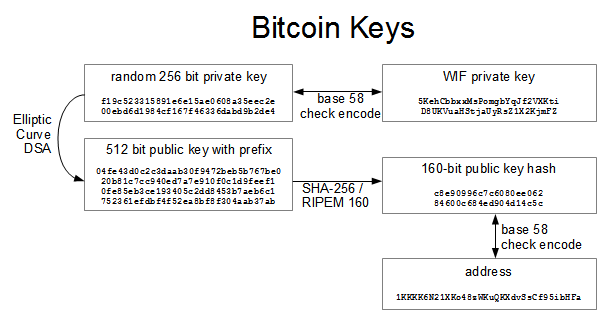
I've been playing around with Richard Kiss's Pycoin app which is clarifying how P2PK works. I see that the hash160 of the value: (0x04) (x-coordinate) (y-coordinate) (for an uncompressed Testnet private key in this instance) gives a hash160 value used to prove ownership of the private key.
How is this detrimental for reuse of private keys if there is no issue with PRNGs providing low entropy? I understand how the Android bug was exploited (to a degree, it reused "random values"), but I fail to understand why only sharing the hash160 in a single transaction can be maliciously exploited. To clarify, I'm not talking about privacy concerns of tracking addresses through the Blockchain.
EDIT: The vulnerabilities in question (as specified in the answer are related to quantum computing and/or EDCSA weaknesses, neither of which exist)


I'm confused as to what you are asking about. Can you explain what "malicious exploit" you think might be possible, and how it would work? – Nate Eldredge – 2014-10-01T14:08:36.210
I'll try to find the link. It was a /r/Bitcoin discussion where the argument was that the Hash160 was obfuscating users' public addresses and the fact that the hash160 is only shared once the txn is broadcast. But for the sake of this question, is there any vulnerability in reusing keys besides compromising economic anonymity? – Wizard Of Ozzie – 2014-10-01T16:04:49.053